Shop♡Ease: AI-Powered Fashion Recommendation Platform
2026A full-stack, AI-driven e-commerce platform processing 35GB of H&M transaction data using deep autoencoders, PCA, and GPU-accelerated clustering.
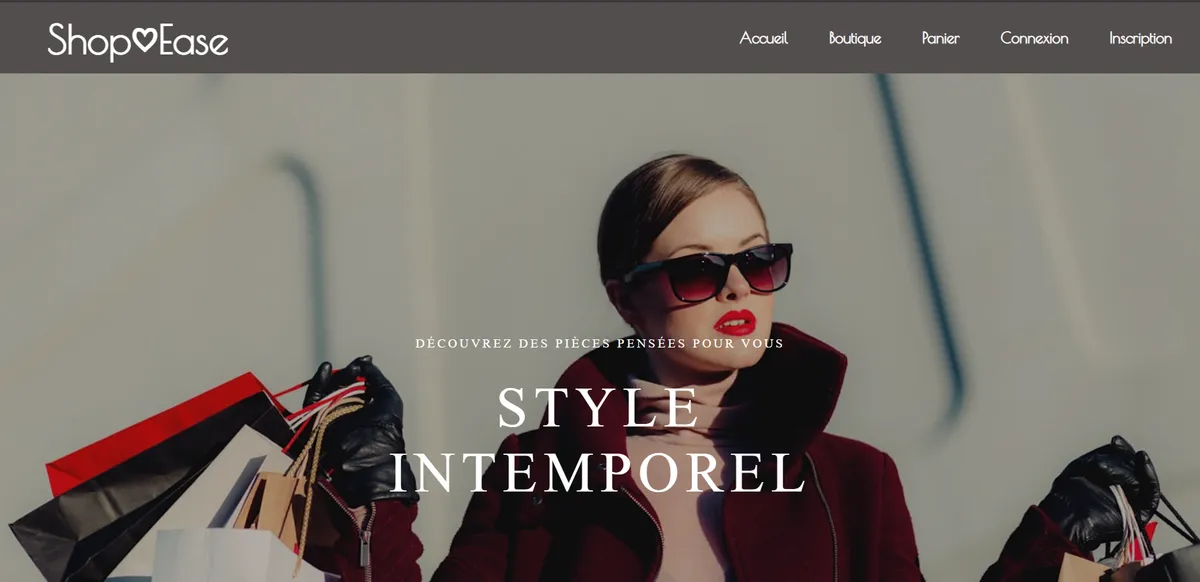
🛍️ Shop♡Ease: Intelligent E-Commerce Solution
Live Demo: Shop♡Ease Platform (Available until Feb 28, 2026)
Welcome to Shop♡Ease, an advanced, full-stack e-commerce platform that bridges the gap between modern web development and deep learning. Built on top of the massive H&M Personalized Fashion dataset, this project demonstrates how to process millions of transactions, extract behavioral features, and serve intelligent recommendations in real-time.
Watch the Platform Demonstration:
🛑 The Problem
Modern e-commerce thrives on personalization. However, building a scalable recommendation engine presents several severe technical hurdles:
- The “Medium Data” Bottleneck: Processing years of transaction logs (~35 GB) typically crashes standard RAM limits, requiring specialized ETL (Extract, Transform, Load) pipelines.
- High-Dimensional Features: Combining item metadata (color, department, garment type) with behavioral data (price standard deviation, sales velocity) creates a sparse, high-dimensional matrix that classical clustering algorithms struggle to process efficiently.
- System Latency: Real-time recommendations and image serving must be nearly instantaneous, which is difficult when querying across hundreds of thousands of active products.
💡 The Solution
We architected Shop♡Ease to tackle these problems at every layer of the stack, combining a memory-optimized data pipeline, GPU-accelerated Machine Learning models, and a highly decoupled SPA (Single Page Application) frontend.
🧠 Machine Learning & AI Engine
To generate “visually and behaviorally similar” recommendations, we engineered a comprehensive ML pipeline leveraging both deep learning and classical clustering.
1. Advanced Feature Engineering
Instead of relying solely on item categories, we built a hybrid feature matrix:
- Content Features: Categorical data (Graphical appearance, perceived colors, index groups) was processed using Label Encoding and One-Hot Encoding to capture visual similarity.
- Behavioral Signals (The RAM Killers): We extracted product “personalities” from the 35GB transaction log by calculating Price Statistics (mean, max, std), Sales Velocity (purchase frequency in the last 90 days), and Customer Demographics (channel statistics).
2. Deep Autoencoders & PCA (Dimensionality Reduction)
To make clustering viable, we compressed the high-dimensional feature space using two approaches:
- Deep Neural Network (Autoencoder): We designed an MLP-based Autoencoder using TensorFlow/Keras. The architecture (
Input -> 128 -> Batch Normalization -> Dropout(0.2) -> 64 -> 32 Latent Space) forces the network to learn a dense, 32-dimensional latent representation of every clothing item. - PCA: We also benchmarked Principal Component Analysis to map the variance of the dataset into orthogonal components.
3. GPU-Accelerated Clustering (RAPIDS cuML)
Running K-Means and DBSCAN on hundreds of thousands of vectors on a CPU is painfully slow.
- We utilized NVIDIA Tesla T4 GPUs and the RAPIDS
cuMLlibrary to execute K-Means (cuKMeans) and DBSCAN (cuDBSCAN). - By offloading the matrix math to the GPU, we reduced clustering times from minutes to mere seconds.
- Distance-Based Inference: In production, the API utilizes Euclidean distance within the Autoencoder’s 32D latent space to instantly return the top K most similar items to the user’s current selection.
⚙️ Data Engineering & Backend (FastAPI)
Handling the 35GB dataset on a constrained server required strict memory management.
- Chunked ETL Pipeline: We wrote a custom migration script (
converting_csv_db.py) that streams the 35GBtransactions_train.csvfile in chunks of 500,000 rows. This allows us to aggregate data (like pre-calculating the average price per item) in RAM and dump it into an indexed SQLite database without ever exceeding memory limits. - In-Memory Image Serving: Instead of doing expensive disk reads for thousands of product images, the FastAPI backend indexes a ZIP archive at startup and stores the file pointers in memory, serving bytes directly to the client with
Cache-Controlheaders for ultra-fast load times. - JWT Authentication: The REST API features secure, stateless authentication using
bcryptpassword hashing and JWT Bearer tokens.
🎨 Frontend Architecture (Angular 17)
The user interface was built to provide a premium, seamless shopping experience.
- Component-Driven: Built with Angular 17, the frontend strictly separates concerns into modular components (
BoutiqueComponent,ArticleComponent,PanierComponent). - Reactive State: Uses Angular services and RxJS Observables to manage the shopping cart state and user session globally.
- Dynamic AI Integration: When a user views an item, the frontend asynchronously fetches the pre-computed latent recommendations from the FastAPI backend, dynamically rendering “Similar Products” in an interactive, styled grid using Tailwind CSS concepts.
👥 About the Authors
This project was engineered by a dedicated team of Software Engineering and Artificial Intelligence students at the National School of Applied Sciences (ENSA), Fès (Class of 2026):
- Malak Bensaid
- Hajar Slimani
- Douaa Berrahmo
- Hachem Squalli ElHoussaini
and Supervised by Asmaa Rassil
We transformed theoretical ML concepts into a tangible, high-performance web application, demonstrating how complex data pipelines and deep learning models can be successfully integrated into modern e-commerce systems.